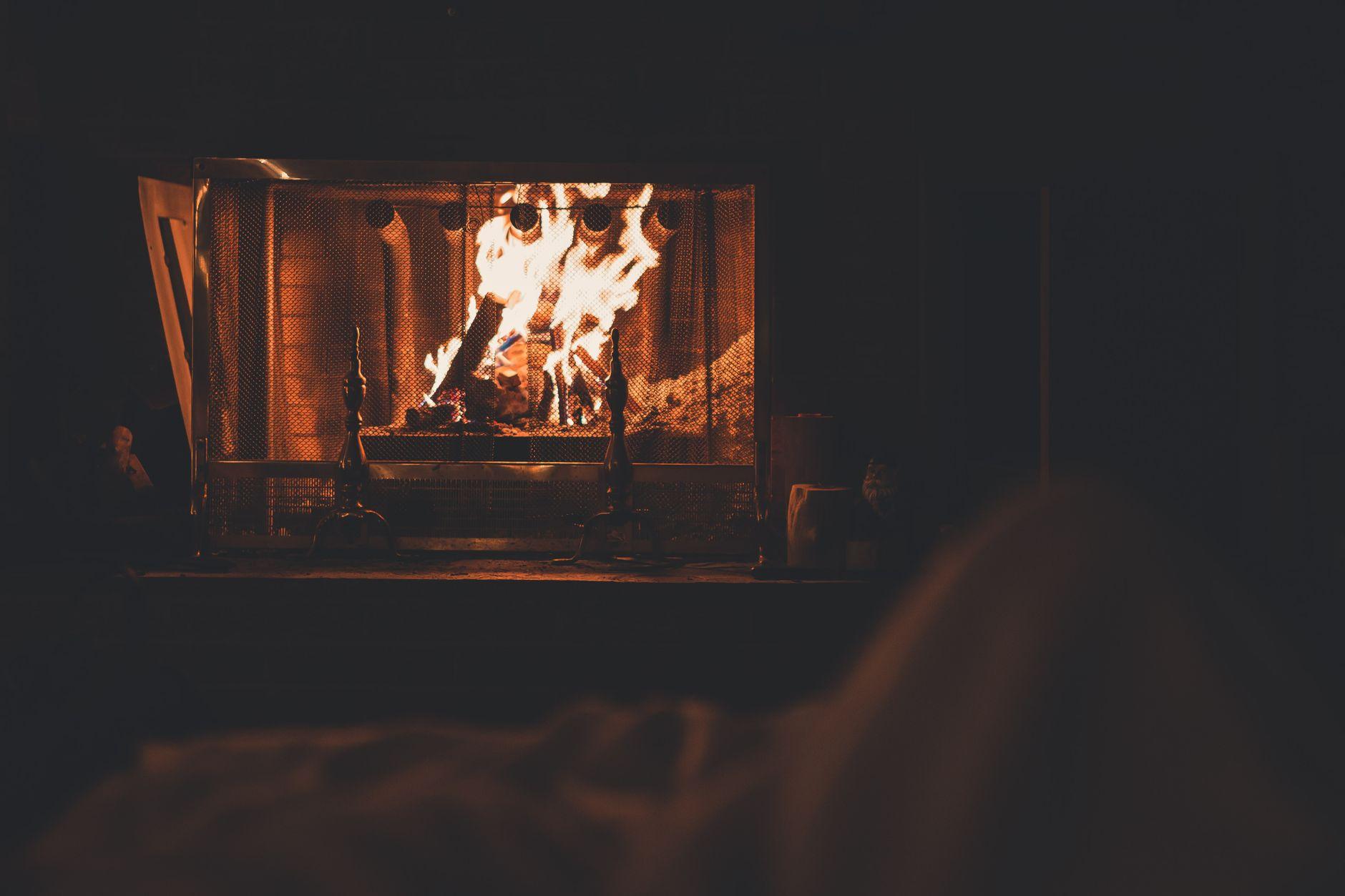
Parents and pet owners in Orange ask us one question about the front of a fireplace more than any other: should it be a mesh screen or glass doors? The honest answer depends on what burns in it, who is in the room and how the fireplace gets used. Here is how the options compare, and what each one costs to get right.
The options side by side
| Front | Stops sparks | Keeps small hands off | Heat into the room | Gets hot |
|---|---|---|---|---|
| Freestanding mesh screen | Mostly | Only if it is heavy and wide | Full | Moderately |
| Built-in mesh curtain | Yes, when closed | Partly; it can be pushed | Full | Moderately |
| Glass doors with mesh behind | Yes | Yes, when latched | Reduced while closed | Glass gets very hot |
| Mesh barrier over gas unit glass | Not needed | Yes | Barely changed | Stays cooler than the glass |
No single front does everything. The table shows the trade.
Mesh screens: simple, and easy to get wrong
A freestanding screen is the cheapest option and the one we see fail most often in homes with toddlers. Light screens tip over, and a child who pulls up to standing on one can bring it down onto the hearth. If you use one, it should be heavy, wider than the opening and close enough that no gap opens at the sides.
Built-in curtain screens hang from a rod inside the opening and draw closed. They stop sparks well, but a curious child or a dog nosing at the fire can push through the mesh. They also wear: holes, bent rods and curtains that will not fully close are common on older Orange fireplaces.
Glass doors: better barrier, hotter surface
Glass doors close the opening completely. With the latch shut, sparks stay in and little hands stay out. Most door sets have a mesh curtain behind the glass, so you can open the doors and keep the screen closed.
The downside is heat. The glass on a closed door set over a wood fire gets hot enough to burn. In a house with a crawler, that means a gate around the hearth as well, not instead. Doors must also fit the opening properly: a set that does not match the size and shape lets cold air and sparks escape at the edges.
Door glass on wood fireplaces is tempered or ceramic depending on the set, and it can crack with a cold splash or a knock. A cracked pane should be replaced before the next fire.
Gas units: the glass is the hazard
A sealed gas fireplace already has glass across the front. That glass can reach several hundred degrees, and a child's hand is at exactly the right height. Many recent units ship with a mesh barrier fitted a short distance ahead of the glass. If yours has none, a barrier made for that model can often be added.
We check for this on every gas unit we inspect, and we note it on the report even if you did not ask.
What decides the price
None of these fronts has a single published price with us, because the opening and the fireplace decide the job:
- Size and shape of the opening. Arched and very wide openings need custom door sets.
- Masonry or factory-built. Factory-built fireplaces need doors listed for that model; a generic set can block air the unit relies on.
- What exists now. Removing an old door frame or curtain rod is part of the work.
- The gas model. Barriers for sealed units are model specific, and some older units have none available.
- Hearth changes. If the hearth edge also needs softening or extending, that is a separate line.
We measure on the visit, check the fireplace and come back with a written figure for each option you want to compare.
Ask for a measuring visit and written figures for a screen, doors or a barrier, and tell us whether the fireplace burns wood or gas.
Our recommendation by household
These are starting points, not rules. Every home is different.
- Toddlers, wood fireplace used often. Glass doors with a mesh curtain behind them, plus a hearth gate while the fire burns and for an hour after.
- Toddlers, wood fireplace rarely used. Doors kept latched, and a gate during the few fires a year.
- Older children, occasional fires. A good built-in curtain in working order, with a clear rule about the hearth.
- Dogs and cats. Doors or a heavy screen; a curtain alone lets a nose through.
- Gas unit. A mesh barrier in front of the glass, and the gas key or switch where small fingers cannot reach it.
- A grandparent who is unsteady. A hearth edge with no sharp corners matters as much as the front itself.
Habits that go with any front
Even the right front works only if the household uses it. Latch the doors every time, not just when the fire is roaring. Keep the hearth clear of toys, dog beds and baskets of kindling. Leave the gate up until the glass and the firebox have cooled, which takes longer than most people expect. And keep matches, lighters and the gas remote on a high shelf. We note on the report anything in the room that makes these habits harder.
The parts behind the front
A new front does not fix what sits behind it. A cracked firebox, a damper that will not close or a flue that has not been swept can make a fireplace unsafe however good the doors are. That is why we look at the whole fireplace when we measure. If something behind the front needs attention, it goes on the same sheet.
Our fireplace repair page and fireplace remodel page cover larger changes. If you are thinking about replacing an open fire altogether, read gas insert or open fire with kids. The inspection price guide lists our visit prices.
When you want the options measured and priced for your own fireplace, start at our contact page and mention who shares the room with the fire.
Want Someone to Look at Yours?
Prentice Chimney Works works from Orange and looks at fireplaces through the eyes of the people around them: children, pets and older relatives. You get a written list of risks with photos, and a price for each fix before anything starts.