A gas fireplace that misbehaves in a family home is not just an inconvenience. A pilot that keeps dying, glass that fogs up white, a whiff of gas when the knob turns: each one has a cause, and the person you hire should find it before anyone lights the unit again. Here is how we approach those calls in Orange, and what any technician working on your fireplace should be doing.
Before you hire anyone: the gas smell rule
If the room smells of gas, nobody flips a switch, lights anything or tries the fireplace again. Gather the children and pets, go outdoors and ring your gas supplier from the yard. Only once the supplier has made the line safe should a fireplace technician come in. That rule comes first, every time.
What a proper repair visit includes
A gas fireplace repair is part diagnosis, part safety check. Whoever you hire should do all of the following, and you should be able to watch.
- Read the rating plate. Every unit has one, usually behind the lower grille. It names the maker, the model and the gas it was built for. Parts are model specific, so a technician who orders without reading it is guessing.
- Look before lighting. The burner, the pilot assembly, the logs or media, the glass and its seal, the vent connection at the back. Dust, spider webs and shifted logs cause a surprising share of faults.
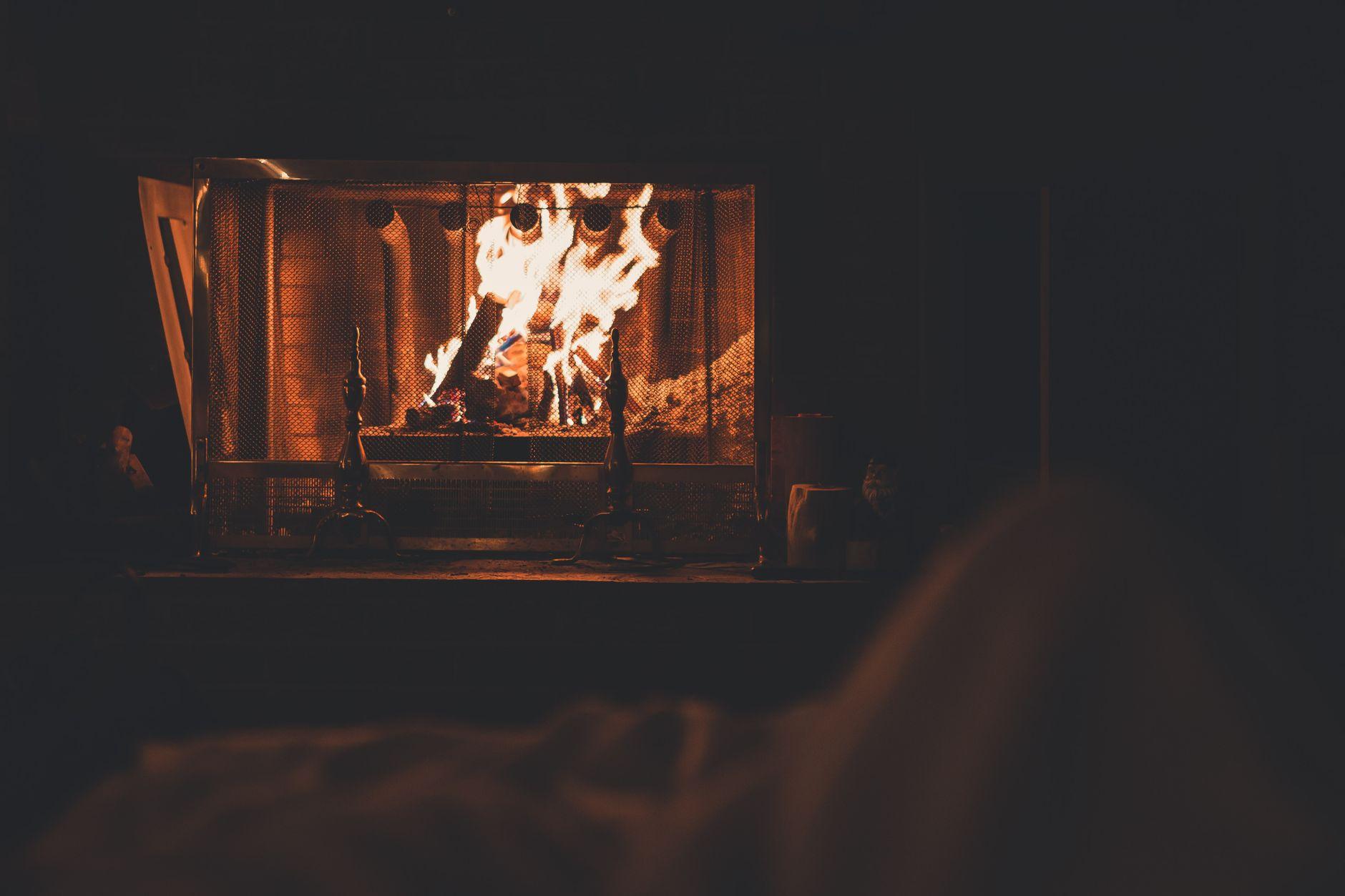
- Light it and watch. The flame should be steady and mostly blue at the base, with no tall, dirty orange tongues licking the glass. A pilot that lights but will not hold points to a different part than a burner that will not catch.
- Test for leaks at the valve. With a liquid or an electronic detector, around the fittings in the control compartment.
- Take a carbon monoxide reading. Near the opening and in the room, with the unit running. In a home with a baby or an older relative, this number matters more than anything else on the sheet.
- Check the barrier. If there is no mesh screen in front of the glass, say so.
If a technician skips the lighting and the readings, the visit was a parts swap, not a repair.
Signs that need a call rather than a reset
Some faults clear with a pilot relight. Others mean the unit should stay off:
- Soot building up on the glass or on the wall above the opening.
- A pilot flame that lifts away from its sensor or flickers yellow.
- A sharp smell that lingers after the fire is out.
- Glass with a crack or a chip, however small.
- A carbon monoxide alarm that has sounded, even once.
- Scorching on the mantel or the wall beside the unit.
Any of these are reasons to leave the fireplace off and book a visit.
What decides the price of a gas fireplace repair
Gas fireplace fixes carry no flat published figure; which fault you have, and which part it needs, drives the cost. A dirty pilot hood is a short visit. A failed valve on a model the maker no longer supports is a much bigger job. What sets your figure:
- The part. Sensors and igniters are modest; valves and control boards cost more.
- The model and its age. Current models have parts on the shelf; older ones may need ordering, and some are simply out of production.
- Access. A unit set behind a tight stone surround or a built-in media wall takes longer to reach.
- The vent. If the problem sits in the vent run or the termination outside, the work moves from the room to the roof or the wall.
- What else the safety check finds. A missing barrier or a cracked glass panel goes on the same sheet as its own line.
After the diagnosis, you get a written figure for each item, and nothing gets replaced until you agree.
Ask for a gas fireplace repair visit and a written figure, and tell us the make of the unit if it is printed anywhere you can see.
How to compare two technicians
When two companies quote the same job, compare these points rather than the bottom line alone:
- Did they read the rating plate and name the part by model?
- Did they light the unit and take a carbon monoxide reading?
- Is the figure written, with the part and the labor shown?
- Do they say what happens if the part is no longer made?
- Do they mention the glass barrier, the alarm and the gas key, or only the fault you called about?
A lower figure that skips the safety checks is not a saving in a house with young children.
What we will not do
We do not bypass safety parts to get a unit running, we do not swap in parts from other makers, and we do not light a fireplace that failed a leak test. If a unit is too old to repair sensibly, we say so and set out the options, including replacing it, without pressure.
Gas fireplaces in Orange homes
Many homes around Orange, from older ranch houses to newer tracts, have a gas unit that someone added to a wood fireplace years ago, or a sealed box set into a wall. Both kinds turn up on our calls. The older log sets in open fireplaces have their own quirks: the damper must stay open, and a clamp or stop on it is a safety feature, not a nuisance.
Our gas fireplace repair page explains the service, and what a hearth safety visit costs sets out the inspection prices if you would like a full look first. If you are weighing a sealed gas box against an open fire, read gas insert or open fire with kids.
When the fireplace is acting up, head to our contact page with what it does and what kind of unit it is, and we will arrange a visit.
Want Someone to Look at Yours?
Prentice Chimney Works works from Orange and looks at fireplaces through the eyes of the people around them: children, pets and older relatives. You get a written list of risks with photos, and a price for each fix before anything starts.